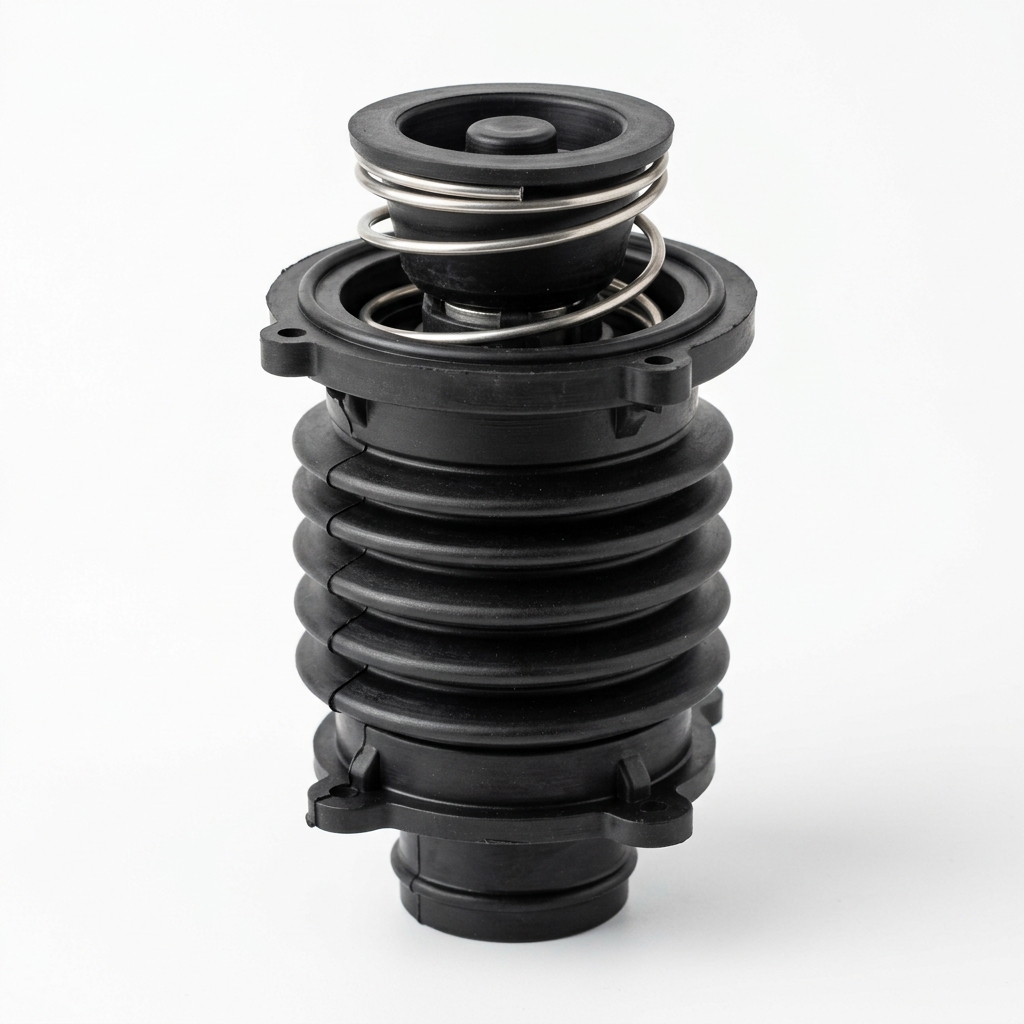
The Crucial Drainage Assembly
Washing machine drainage systems operate under gravity and spring-actuated pull mechanics. A failure in the drain bellows results in either water constantly leaking out during the wash cycle, or the tub refusing to drain at all. Both scenarios result in urgent service calls. This technical guide outlines the three primary failure modes in drainage assemblies and how to stock the best replacement spares.
1. Bellows Seal Tear (Chemical and Mechanical Fatigue)
The rubber bellows constantly expands and contracts to open and close the drain. Cheap bellows are made of standard vulcanized rubber which degrades when exposed to bleach and alkaline detergents, leading to dry rot and cracks. Premium spares use Synthetic EPDM rubber, which maintains flexibility and resists chemical degradation over thousands of cycles.
2. Tension Spring Fatigue
The internal stainless steel spring pushes the bellows down to seal the drain. If the spring loses its tension due to poor heat-treatment or rusting, it will fail to compress the bellows fully, causing slow leaks. Wholesalers should verify that their parts use Grade 304 Stainless Steel springs, which resist rust and retain tension over years of contact with water.
3. Guide Rod Slip
The plastic guide rod connects the bellows assembly to the drain motor pull cable. In low-quality aftermarket parts, the plastic loops are brittle and easily snap under the pull tension of the motor. Opt for nylon-infused plastic components for high tensile strength.
Conclusion
Providing high-quality drainage valves with EPDM rubber seals and SS-304 springs protects your B2B clients from repeated customer callbacks. Jai Mahavir Electricals manufactures all drainage spares to these exact technical standards, ensuring reliable fluid control.